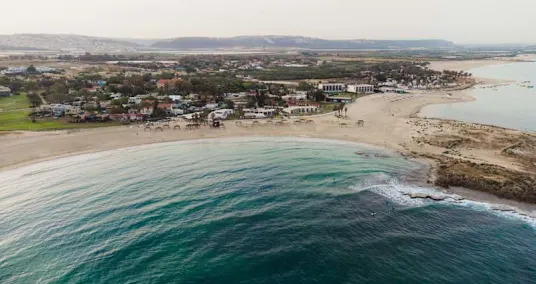
The discovery was made in an ancient shipwreck in the Dor Lagoon near the Carmel Coast, where archaeologists recovered nine pieces of unprocessed iron known as “blooms.”
Researchers from the University of Haifa said Wednesday that an underwater excavation off Israel’s northern Mediterranean coast uncovered what they described as the earliest known cargo of raw iron transported by ship, dating back around 2,600 years, Xinhua reported.
The discovery was made in an ancient shipwreck in the Dor Lagoon near the Carmel Coast, where archaeologists recovered nine pieces of unprocessed iron known as “blooms.” According to the university, the find provides direct evidence of how iron was transported in its earliest commercial stages.
The material was preserved in its original form, having solidified directly in a smelting furnace without undergoing forging or further refinement. Researchers said this distinguishes the cargo from later iron artifacts that typically show signs of shaping or tool-making.
Unlike copper and bronze, which could be melted into liquid form in ancient production processes, iron was heated with charcoal to produce a solid, porous mass. That mass was generally hammered to remove impurities and create denser material suitable for tools and implements.
The recovered blooms showed no indication of that secondary processing stage, suggesting they were transported immediately after production.

Earliest iron shipment discovered in ancient Mediterranean wreck
To determine the age and condition of the cargo, researchers conducted microscopic and chemical analyses.
Radiocarbon dating was also carried out on charred wood embedded in one of the pieces, helping confirm the timeline of the shipment. The findings were published in the journal Heritage Science.
Researchers said the cargo indicates that iron was being moved in raw form from production sites to other locations for further processing, pointing to a level of specialization in ancient manufacturing and trade networks in the Mediterranean.
The University of Haifa said the discovery provides new insight into early iron production and distribution practices in the region.
LATEST POSTS
- 1
 Home Remodel Administrations: Change Your Residing Space
 - 2'I carried my wife's body for an hour and a half' - BBC hears stories of protesters killed in Iran
- 3Ads promising cosmetic surgery patients a ‘dream body’ with minimal risk get little scrutiny
- 4Little Italy Mercato brings fresh food and community to downtown San Diego
- 5The 20 Most sultry Style of the Time




- Spain’s Picos de Europa: What to see and do in ‘the world’s most beautiful place’
- She loves to give experiences. He goes for sentimental gifts. They ask an expert: What is the perfect holiday present?
- Figure out How to Pick the Right Toothbrush for You
- Volunteers aiding humpback whale stranded in Baltic get death threats
- Why is the Artemis 2 rocket launch different from all other rocket launches?
- Paraplegic engineer becomes the first wheelchair user to blast into space
- Sean Penn lights up, Kylie Jenner gets A-list approval and 7 other moments you didn’t see at the Golden Globes
- 25 Most Beautiful Villages in France You Can Actually Visit
- Iran warns its ready to open new front in Yemen, close Bab al-Mandab Strait with Houthis